

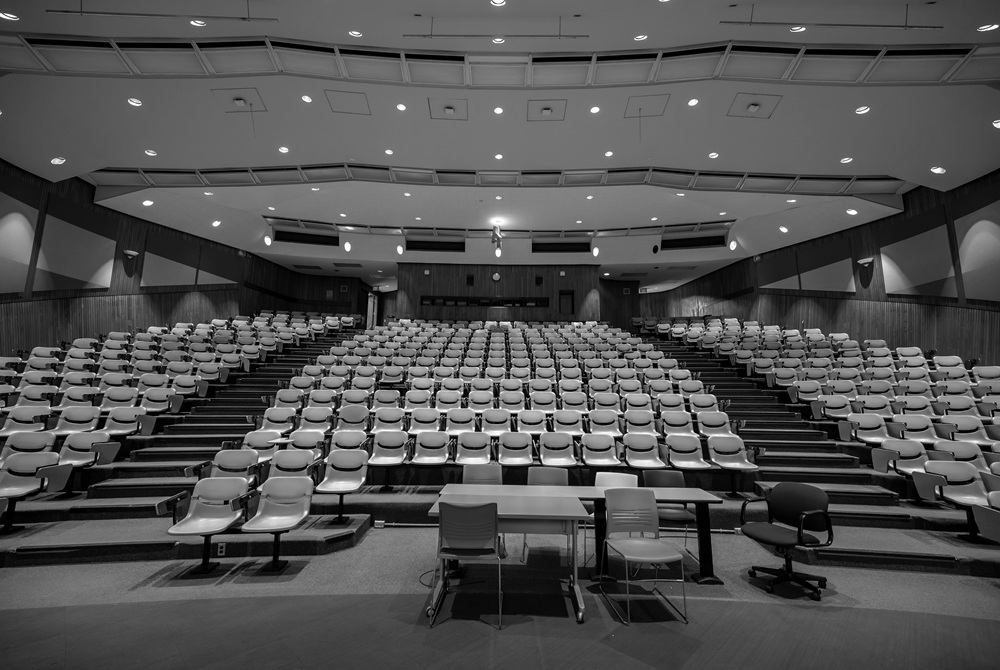
Classrooms are not limited to chalkboard and desks and books when the world has gone digital and everything is turning digital. It has been found that the learning environments of today require state of the art resources in order to support creativity, collaboration, and innovation.
However, how are educational institutions to ensure that they are constantly monitoring, maintaining, let alone improving the classroom infrastructure to accommodate these demands?
Now, meet Building Information Modeling (BIM) – a revolution on the AEC field. Though BIM is commonly thought of as being used for large building construction projects, BIM is actually invaluable to educational institutions as a tool to rethink the design, management, and improvement of classrooms.
Consider a situation where classes are virtually created then actual classrooms, it will be easier for the administrators to picture how renovations will look like, identify how resources are being used, and when they might be due for overhaul without having to physically be in the classroom. This is not a vision for the next generation; this is what BIM services offer on the plate.
This blog explores how BIM modeling, scan to BIM, BIM facility management, and BIM project management are helping schools, colleges, and universities to design better learning spaces.
Understanding BIM in Educational Contexts
BIM is a process of developing a digital model of a physical environment involving design, data, and functionality of a building. This would apply to educational facilities where the university creates a digital model of a classroom, library, an auditorium, and laboratories.
With the help of BIM, administrators get a complete look at existing infrastructure and determine what needs to be done to improve conditions and how to do it with maximum efficiency. It’s not just about constructing new classrooms; it’s about how to create more efficient learning environments from the spaces that students currently inhabit.
Core BIM-Based Solutions for Classroom Management
1. BIM Modeling Services
The core of BIM is in the possibility to develop three-dimensional models of educational spaces. Building information modeling services helps institutions to understand every aspect of the facilities including where furniture should be placed, and how ventilation systems should be arranged. These models provide a basis for planning improvements and remodeling.
When adopting new features such as the smart boards, VR labs among others, BIM modeling guarantees that these additions are incorporated in the layouts without difficulty. This does away with guess work and makes decision making more efficient, reduces costs while at the same time enhancing the learning process.
2. Scan to BIM Services
When it comes to renovating or upgrading older school buildings, there are always challenges that go along with the process — outdated plans, structural differences, and concealed problem. This is where scan to BIM services come into play.
Scan to BIM utilises laser scan technology to capture the measurements and condition of a building as it is. This information is then transformed into an exact electronic representation to have a visual representation of the as-is state of the facility.
For instance, a university that wants to retrofit classrooms with energy efficient lighting can use scan to BIM to get electrical layouts for installation points. The process reduces interferences and makes upgrades feasible and affordable.
3. BIM Facility Management
Replacing classroom resources is not only a process of installation but it is also a process of sustaining. BIM facility management incorporates information from models with management data; institutions can, therefore, track resources in real-time.
Think about a school with an HVAC system integrated with BIM where the system sends notifications of the next maintenance. Or classrooms that have smart projectors that alert the staff of low bulb life. BIM facility management means that problems are solved before they occur which means that classrooms are fully functional all the time.
Besides, BIM is used to manage energy requirements as it looks at usage and makes suggestions for efficiency improvements. It also means that schools, using natural light instead of artificial one where possible, can save money on running costs and hence have less impact on the environment.
4. BIM Project Management
Renovations which are large-scale or constructions of new buildings require the cooperation of different parties. BIM project management offers a single location in which architects, engineers, contractors and administrators can work together.
Even the work process of the project is fully controlled through Building Information Modeling. Stakeholders can easily see what has been accomplished and where there may be problems that could slow down the project or where changes need to be made based on the data collected.
For instance, if a school is put up a new wing with modern classes, BIM project management is involved in managing the project in a way that every detail regarding the structure of the building, or even the gadgets that should be installed are done effectively. The end product is a learning environment that is fit for purpose and fits the need of the current and future education.
Key Benefits of BIM for Classroom Resource Management
1. Data-Driven Decision Making
The information contained in BIM about a building includes design, construction material, and building performance. Such information helps administrators to understand where to allocate resources and where improvements and repairs are needed.
2. Minimized Costs and Errors
BIM enables visualization of a project which allows project designers to spot problems early in the design process. This saves money on construction, repair, and retrofit, hence making things more affordable.
3. Improved Space Utilization
Institutions can set classroom locations with maximum efficiency for maximum results through the help of BIM. This could be to extend seating arrangements or other social areas, but whatever be the case necessitates effective space management by BIM.2
4. Sustainability
There is energy modeling with BIM, meaning that schools can create environmentally friendly spaces. From energy-efficient heating, ventilation, and air-conditioning control to solar panel incorporation, BIM supports environmentally conscious approach and cost-effective ways.
5. Future-Proofing
BIM paves the way for the facilities to adapt when educational needs change, whether it is incorporating technology or extending spaces; with BIM, there is ample room to take care of future needs.
Real-Life Applications of BIM in Education
BIM has already made a significant impact on educational institutions around the world. Here are some practical applications:
Smart Classrooms: Schools are using BIM to introduce newer technologies like an interactive display and IoT devices, where one can experience an elevated level of engagement and a learning environment.
Campus Renovations: Universities use the scan to BIM in making their heritage buildings modernize their heritage buildings without invading their structural integrity.
Green Initiatives: Institutions are using BIM to carry out energy audits that identify areas of improvement in energy performance and implement solutions that reduce green house gas emissions.
How to Choose the Right BIM Partner
A reliable BIM company has to be chosen for the purpose. Look for those who are experienced in educational projects and a wide portfolio of BIM modeling services. Also, the companies that have a strong client support system can be a great choice.
An experienced BIM company will not only produce high-quality digital models but will also guide its client pool on using them to their maximum potential. Ultimately, this will ensure the institutions get the best from the BIM technology.
The Future of Classroom Management with BIM
One can only imagine how BIM is going to grow in the education sector as technology advances. Here is a glimpse of what holds for the future:
AI Integration: AI will help BIM models to predict maintenance requirements and recommend resource utilization.
IoT Connectivity: The IoT devices in the classrooms will feed live data into the BIM models that will make learning spaces dynamic.
AR/VR Applications: Augmented and virtual reality will change how an administrator is able to see the upgrades and renovations making the planning process way more realistic.
These should be adapted to ensure educational institutions reach the present trends so as to provide proper learning environments to the students.
FAQs
Author Bio

Nikhil Agarwal
Chief Growth Officer
Nikhil is a calm and composed individual who has a master’s degree in international business and finance from the United Kingdom. Nikhil Agarwal has worked with 300+ companies from various sectors, since 2012, to custom-build SOPs and achieve operational excellence. Nikhil & his team have remarkable success stories of helping companies scale 10X with business process standardization.
